
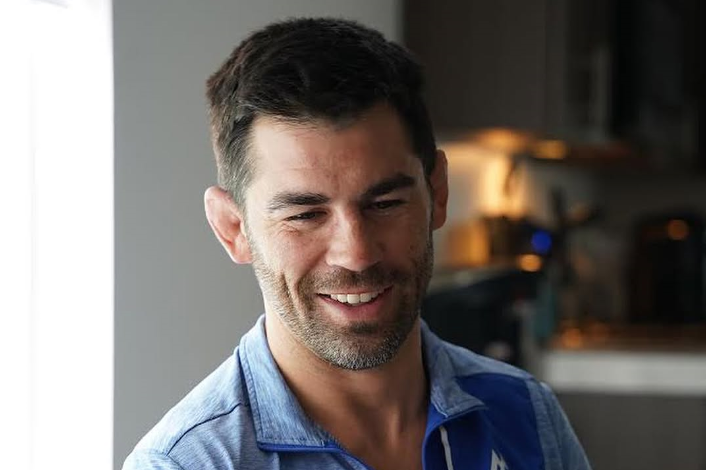
Dominick Rogelio Cruz was born on March 9, 1985, in San Diego, California. When he was about three years old, his family moved to Tucson, Arizona, where he spent most of his childhood. He grew up with his mother, Suzette Howe, his younger brother, Derek, and his maternal grandmother. At one point, the family lived in modest conditions, residing in a trailer park while his mother earned roughly $10,000 a year to support her sons.
Cruz attended Flowing Wells High School in Tucson. He began wrestling in seventh grade and competed throughout his school years, continuing the sport into high school. As a child, he also played other sports such as soccer and baseball before eventually focusing on wrestling.
| Fact Category | Details |
|---|---|
| Full Name | Dominick Rogelio Cruz |
| Date of Birth | March 9, 1985 |
| Birthplace | San Diego, California, USA |
| Nationality | American |
| Early Life | Raised in Tucson, Arizona in modest conditions by his mother |
| Education | Attended Flowing Wells High School |
| Base Sport | Wrestling (started in 7th grade) |
| MMA Debut | January 29, 2005 (RITC 67) |
| Professional Record Start | Began career with a 9–0 undefeated streak |
| Fighting Style | Known for elite footwork, movement, and unorthodox striking |
| Major Titles | WEC Bantamweight Champion, First UFC Bantamweight Champion |
| UFC Achievements | Multiple title defenses against top fighters like Faber and Johnson |
| Injury History | Multiple ACL tears and long layoffs (2011–2015) |
| Historic Comeback | Regained UFC title in 2016 after nearly 4 years away |
| Final Fight | Lost to Marlon Vera in August 2022 |
| Retirement | Officially retired in 2025 |
| Current Role | UFC analyst and commentator (ESPN & Fight Night events) |
| Team Affiliation | Alliance MMA (coach and mentor role) |
| Hall of Fame | Inducted into UFC Hall of Fame (Modern Wing, Class of 2026) |
| Net Worth in 2026 | Not publicly disclosed; earnings from UFC purses, bonuses, PPV shares, and commentary |
View this post on Instagram
Early MMA Career and Professional Debut
Dominick Cruz began his professional mixed martial arts career in 2005 at age 19, competing in regional Arizona promotions. He debuted on 29 January 2005 at Rage in the Cage (RITC) 67, earning a split-decision win over Eddie Castro.
Over the next year he compiled an unblemished 9–0 record, registering several early stoppage victories in RITC events (including TKOs over Rosco McClellan, Tom Schwager and Josh Donahue in 2005).
In 2006 Cruz moved up through the ranks by fighting in the Total Combat promotion, where he captured both the lightweight and featherweight titles. By late 2006 he was a regional champion in multiple weight classes and a top prospect for larger organizations.
Rise Through the Bantamweight Division
After establishing himself on the regional scene, Cruz joined the World Extreme Cagefighting (WEC) promotion in 2007, campaigning in the bantamweight (135-pound) division. In his WEC debut, he faced Urijah Faber in March 2007 and suffered his first professional loss by submission.
Undeterred, Cruz built momentum with a string of decision victories over bantamweight contenders (wins over Shad Smith, Juan Miranda, Charlie Valencia and Ian McCall among others) between 2007 and 2009.
By 2009 he was regarded as the division’s leading challenger. In March 2010 he faced reigning WEC bantamweight champion Brian Bowles at WEC 47 and won via second-round TKO (doctor’s stoppage), capturing the WEC bantamweight title. He defended the WEC belt successfully against Joseph Benavidez later in 2010, solidifying his status as champion in WEC’s final days.
Becoming the Inaugural UFC Bantamweight Champion
Cruz’s WEC championship coincided with the impending merger of WEC into the UFC. At WEC 53 on 16 December 2010, Cruz defended his WEC title against Scott Jorgensen. Crucially, the winner of that bout would also be recognized as the first-ever UFC bantamweight champion.
Cruz dominated the five-round fight and earned a unanimous decision over Jorgensen, thus becoming the inaugural UFC bantamweight champion. This victory formally unified the WEC belt under the UFC banner and established Cruz as the first champion in the UFC’s 135-pound division.
View this post on Instagram
Title Defenses and Championship Achievements
In the years that followed, Cruz cemented his place as an elite bantamweight champion through high-profile title victories. He defended his UFC bantamweight title against top contenders, including a rematch with rival Urijah Faber.
In their June 2011 rematch (UFC 132) Cruz won a clear five-round decision over Faber, handing him the only second loss of Cruz’s career. Later that year, Cruz defended his belt against flyweight great Demetrious Johnson, again winning a unanimous decision (October 2011).
These two title defenses against Faber and Johnson highlighted Cruz’s technical skill and versatility. Across this stretch he remained undefeated and earned praise as one of the pound-for-pound elite. By late 2011, Cruz had established a championship résumé that included decisive wins in both the WEC and UFC, a feat achieved by few fighters.
Injuries, Setbacks, and Historic Comebacks
Cruz’s momentum was then interrupted by a series of serious injuries. Beginning in 2011 he suffered knee and groin injuries (notably a torn ACL) that kept him out of competition for years.
In January 2014 UFC President Dana White announced that Cruz had formally vacated the bantamweight title due to his long-term injuries, a rare occurrence in the sport. This began a prolonged layoff: Cruz did not fight between 2011 and 2015, grappling with multiple surgeries.
Remarkably, Cruz mounted a historic comeback in 2016. On 17 January 2016 at UFC Fight Night in Boston, he returned from nearly four years away and faced reigning champion T.J. Dillashaw. In a dramatic upset, Cruz won a hard-fought split decision to reclaim the UFC bantamweight championship.
This victory achieved despite three ACL surgeries and a torn quadriceps suffered in the prior four years was widely hailed as a storybook return. Cruz himself remarked afterward, “Honestly, nobody is retiring me except for me… I’ve been through too much,” underscoring the adversity he overcame.
He then made another successful title defense in June 2016 by outpointing Urijah Faber for a unanimous decision, improving to 2–1 in their rivalry. Late in 2016 Cruz lost the title to Cody Garbrandt and took time off with minor injuries.
He scheduled a comeback to fight rising contender Jimmie Rivera in late 2017 but withdrew due to a broken arm. He would not compete again until 2021, when he won decision bouts over Casey Kenney (March 2021) and Pedro Munhoz (December 2021).
Cruz’s final fight was a loss to Marlon Vera in August 2022. After undergoing another injury ahead of a scheduled 2025 bout, he announced his retirement from competition in 2025.
View this post on Instagram
Dominick Cruz’s Unique Fighting Style and Technical Approach
Dominick Cruz earned acclaim for a highly unorthodox and elusive fighting style. He was constantly in motion, using lateral footwork and feints to confound opponents. Cruz rarely stood still; instead, he would bounce on his toes, swivel his hips, and switch stances unpredictably while striking.
This constant movement and volume striking was a hallmark of his style. Analysts have noted that Cruz’s footwork was eternities ahead of its time, as he could seamlessly transition between striking and wrestling.
He often used a subtle forward feint (sometimes described as a dart) to bait opponents in, then executed a sudden knee-tap double-leg takedown or lateral throw from distance. His wrestling background allowed him to mix in takedowns from unusual angles.
Even so, Cruz was primarily celebrated for his defence: he used head movement, shoulder rolls and rapid counters to avoid damage. Commentators frequently struggled to label his technique, at times describing it as weird or awkward a characterization Cruz himself later addressed in his commentator role.
Transition From Fighter to UFC Analyst and Commentator
While still an active champion, Cruz began building a parallel career in broadcasting. In 2016 the UFC announced that Cruz (alongside Daniel Cormier) would join the promotion’s broadcast team, preparing to eventually succeed longtime commentator Joe Rogan.
He first appeared in the booth as a guest analyst at UFC on FOX 17 (2016) and gradually took on more commentary work. Cruz proved adept at explaining technique; he often emphasized the nuance in fighters’ styles (recalling that he himself had been misunderstood during his career).
Over the years he has served as an analyst for Fox Sports and ESPN, breaking down fights and offering behind-the-scenes insights from ringside. By the time he retired from fighting, he was a regular color commentator and studio analyst for UFC events, leveraging his championship experience in his broadcast role.
Cruz also took on leadership roles on the reality show The Ultimate Fighter, serving as head coach for Team Cruz (notably facing Urijah Faber in 2013 and Cody Garbrandt in 2018). These roles further solidified his reputation as a knowledgeable ambassador of the sport.
Career Legacy and Impact on the Bantamweight Division
Dominick Cruz’s legacy in MMA is widely recognized. He was a pioneer of the modern bantamweight style, and his success helped elevate the 135-lb division to prominence. A two-time UFC bantamweight champion and the first to hold that title, Cruz’s career achievements earned him respect as one of the all-time great bantamweights.
His influence is noted by peers and analysts alike: UFC president Dana White has cited Cruz as one of the best pound-for-pound fighters when healthy, and after retirement Cruz was regarded as a top bantamweight alongside later stars such as Aljamain Sterling and Marlon Vera.
In September 2025 the UFC announced that Cruz would be inducted into the Hall of Fame’s Modern Wing as part of the Class of 2026. This honour reflects his impact: he won belts in multiple organizations, defended those titles against elite opponents, and endured and overcame unprecedented injury layoffs.
In team contexts, Cruz has also served as a captain and mentor at Alliance MMA, influencing younger fighters with his unique approach to footwork and strategy. His title fights especially against Faber, Johnson, and Dillashaw remain highlights in UFC bantamweight history.
View this post on Instagram
Current Work, Recent Projects, and Professional Activities
As of 2026, Dominick Cruz continues to be active in the MMA community through media and mentorship. He remains a fixture on UFC broadcasts, providing expert commentary for ESPN and UFC Fight Night events.
Following his 2025 retirement, Cruz has focused on his analyst career and involved himself in behind-the-scenes roles. He also maintains ties to Alliance MMA, contributing as a coach and advisor at the gym he helped lead.
In early 2026, Cruz’s induction into the UFC Hall of Fame was formalized, marking the latest milestone in a storied career. He occasionally appears in media interviews and may participate in special appearances such as guest judging or speaking at UFC events.
Through these activities along with training seminars and commentary Cruz remains a prominent figure in the sport, sharing the expertise that defined his championship years.
Dominick Cruz Net Worth
As of 2026, Dominick Cruz’s net worth has not been publicly disclosed, and no figures have been officially verified by major financial authorities. He has earned income from UFC fight purses, performance bonuses and Fight of the Night awards, pay-per-view points from title bouts, as well as his role as a UFC analyst and commentator. However, specific earnings from these sources remain undisclosed.
FAQs
1. Why is Dominick Cruz considered one of the best bantamweights?
Cruz is widely respected for his technical skill, movement, and championship success. He was the first UFC bantamweight champion and defended the title against elite competitors.
2. How many times did Dominick Cruz win the UFC title?
Dominick Cruz won the UFC bantamweight title twice. His second title win in 2016 came after a long injury layoff, making it one of the most notable comebacks in MMA.
3. What injuries affected Dominick Cruz’s career?
Cruz suffered multiple serious injuries, including several ACL tears and muscle injuries. These kept him out of competition for extended periods between 2011 and 2015.
4. When did Dominick Cruz retire from MMA?
Dominick Cruz officially retired from professional MMA in 2025. His decision followed injuries that prevented a planned return fight.
5. What is Dominick Cruz doing after retirement?
After retiring, Cruz continues to work as a UFC analyst and commentator. He also contributes to training and mentoring fighters at Alliance MMA.
6. Did Dominick Cruz ever fight Urijah Faber?
Yes, Cruz fought Urijah Faber three times. He won two of those bouts, including a key title defense in the UFC.